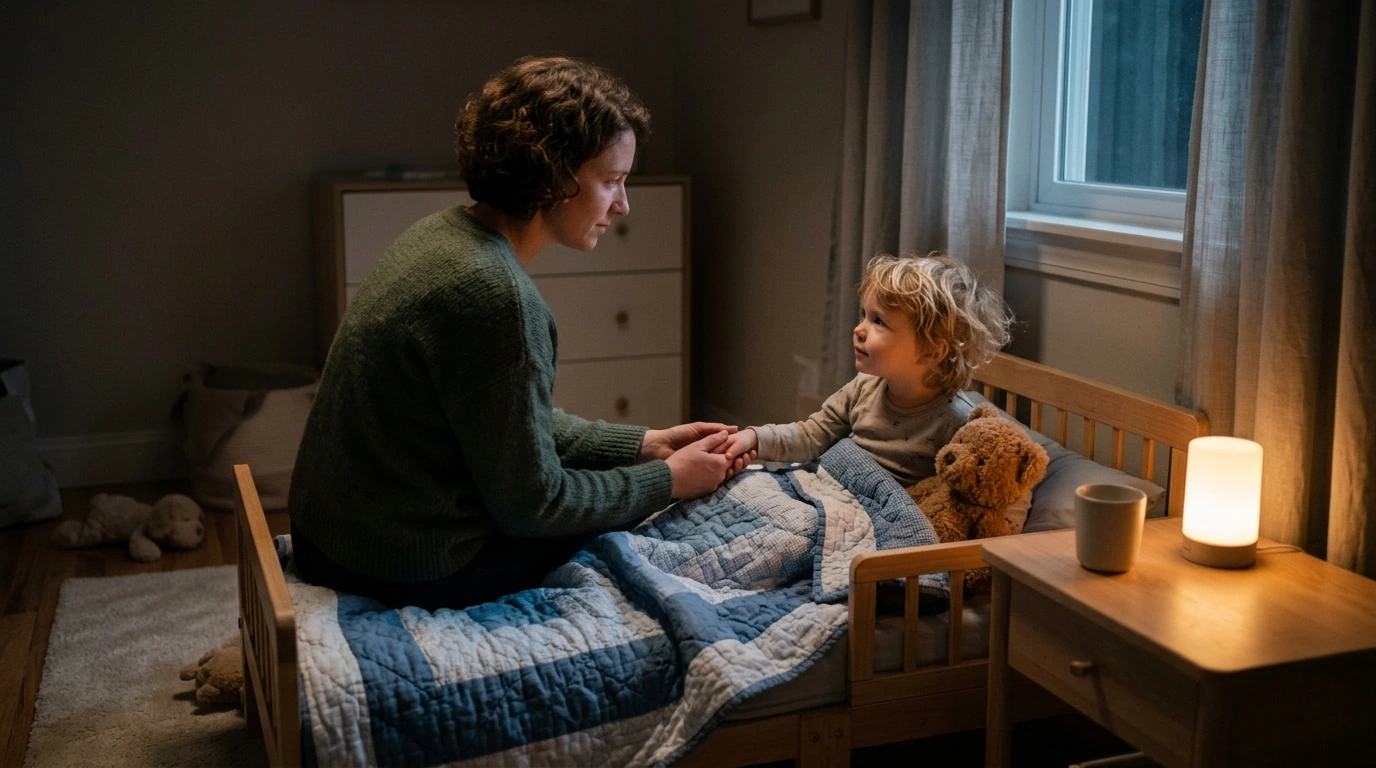
Nightmares can feel intense for toddlers and exhausting for parents—especially when they repeat night after night. A calm, predictable response helps a child feel safe, return to sleep faster, and reduce fear around bedtime over time. The steps below focus on what to do in the moment, how to adjust the bedtime routine, and when to consider extra support.
Nightmares and night terrors can look similar at 2 a.m., but they’re different sleep events—and the right response depends on which one you’re dealing with. Nightmares usually happen in the second half of the night. Toddlers often wake fully, cry for a parent, and may be able to describe scary images. Night terrors usually occur earlier in the night; a child may scream, thrash, or look “awake,” yet they aren’t truly awake and typically won’t remember it in the morning.
If your toddler can be comforted, makes eye contact, and seeks closeness, it’s more likely a nightmare response. Different patterns call for different strategies: nightmares benefit from reassurance and gentle reconnection; night terrors benefit from safety measures and minimal stimulation. If you’re unsure, track timing, behavior, and recall for a week to clarify the pattern. Helpful background reading is available from HealthyChildren.org (American Academy of Pediatrics) and the NHS overview of night terrors.
| Feature | Nightmares | Night terrors |
|---|---|---|
| Typical timing | Later night / early morning | First few hours after falling asleep |
| Awake and responsive | Usually yes | Often no; may seem awake but isn’t |
| Remembers episode | Sometimes | Usually not |
| Best parent response | Comfort, words, help settling | Keep safe, stay close, avoid waking fully |
| How long it lasts | Minutes to longer if fear persists | Often 5–15 minutes |
When a toddler wakes scared, the goal is to communicate safety without accidentally turning the wake-up into a long “party.” A simple plan helps you stay steady, even when you’re tired.
Toddlers don’t need a perfect explanation; they need emotional safety. Validate the feeling without confirming the fear as real: “That felt really scary,” rather than “There are monsters.” Avoid long interrogations in the middle of the night—detailed retelling can strengthen the image and make it harder to fall back asleep.
If your child wants to share, keep it short: one choice question (“Do you want a hug or water?”) and one grounding statement (“You’re in your room, safe and warm.”). Also avoid big rewards for waking (screens, snacks, or playtime), which can unintentionally train more wake-ups. If your toddler repeatedly leaves the bed, calmly return them with minimal talking; predictability reduces power struggles.
Overstimulation late in the day (busy outings, loud environments) can make it harder to downshift at night. Illness, fever, and certain medications may intensify dreams; focus on hydration, comfort, and talk with a clinician if nightmares spike after starting a new medication. Separation anxiety can also look like nightmares—adding 10 minutes of child-led “special time” during the day often reduces clinginess at night. For general nightmare background and common triggers, see the Mayo Clinic’s overview of nightmares.
A single nightmare episode often lasts a few minutes, though a toddler may need additional time to fully relax and fall back asleep. Many children go through phases where nightmares increase for a few weeks (developmental changes, stress, overtiredness, or illness can contribute), and consistent routines often help reduce frequency over time.
Occasional comfort is okay if it helps your child feel safe, but repeatedly moving to a parent’s bed can quickly become the expected routine after every wake-up. Many families have more success comforting in the toddler’s room (brief cuddle, calm script, timed sit) and staying consistent across caregivers.
Choose something simple and non-stimulating: a warm, dim night light, steady white noise, and one consistent comfort item (stuffed animal or blanket). Avoid bright or color-changing lights that can feel exciting, and keep any nighttime comfort brief so your toddler can drift back to sleep.













Leave a comment